 November 6 – 20, 2010 – gallery installation & performances @ The Box Gallery.
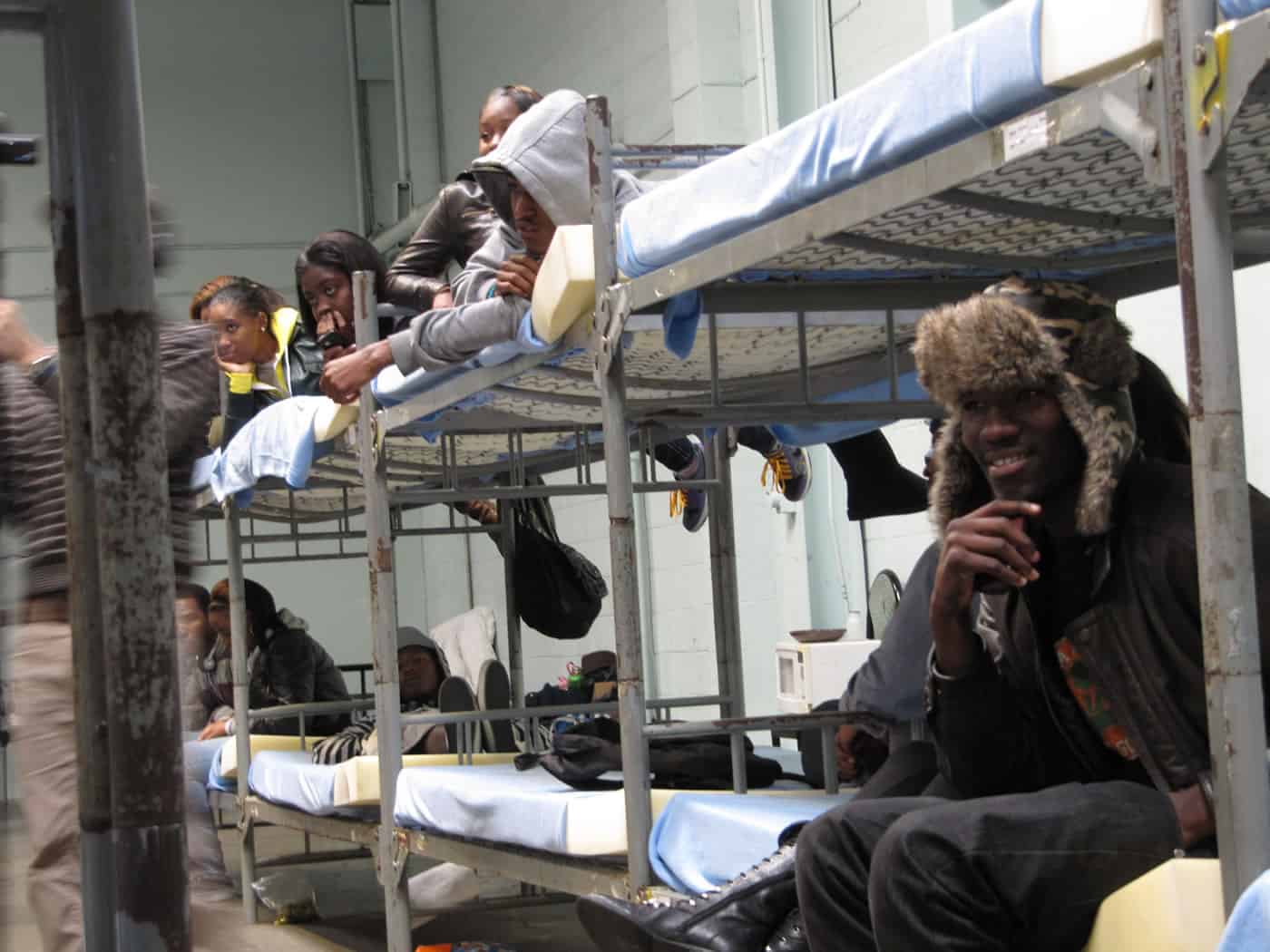
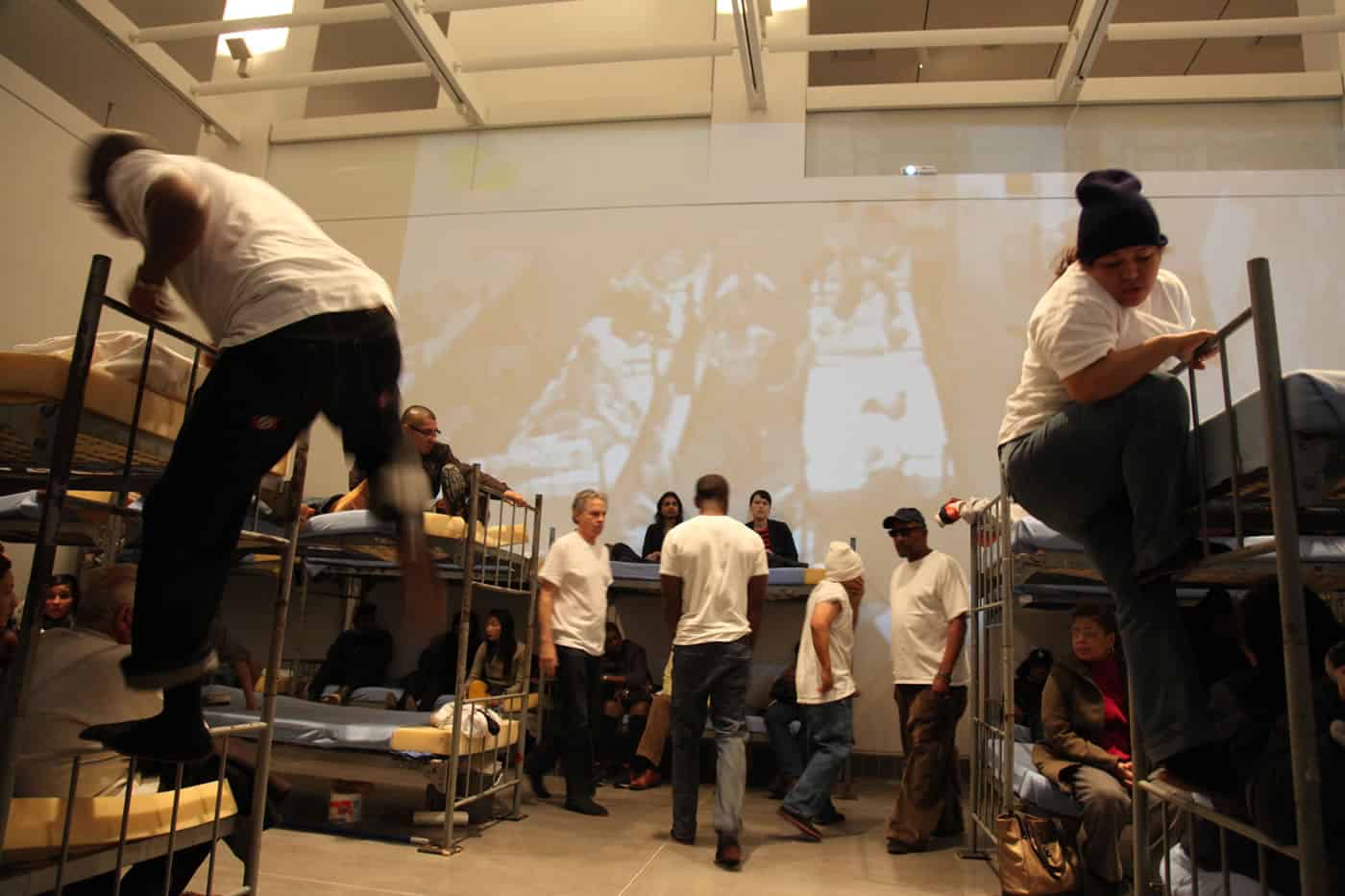
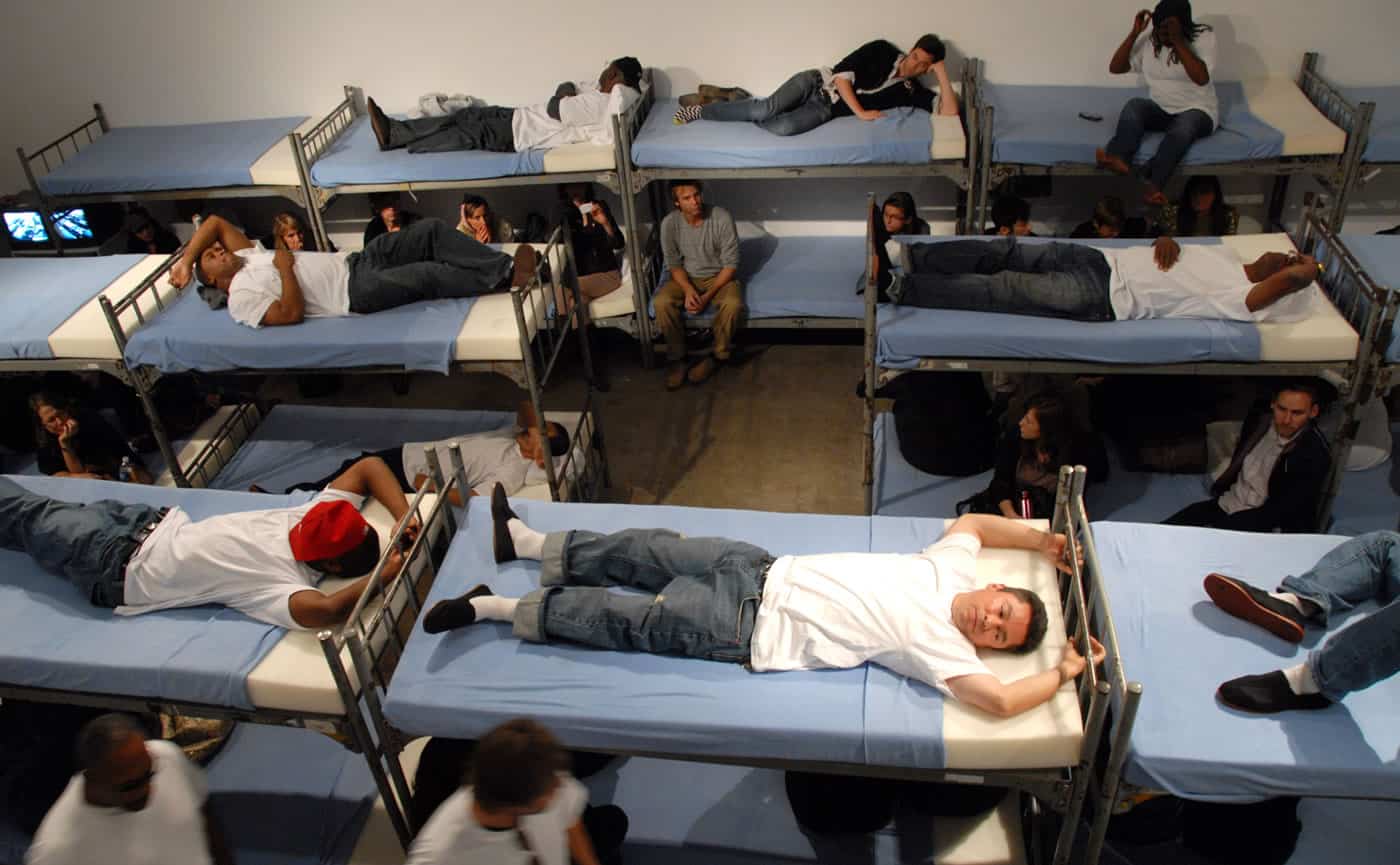
The main floor gallery was installed wall to wall with 30 prison bunk beds, same as in over crowded California State Prisons— where gymnasiums and cafeterias have been turned into dormitories housing 3 and 4 hundred prisoners. Video elements were installed on the beds. The basement gallery included images charting the expansion of the prison population and new prison construction in California over the past 3 decades and the 21-year-and-counting-history of the lawsuit challenging the quality of the health services available to inmates in the state’s over-crowded prisons. In 2010 the 9th Circuit Court of Appeals ruled that these conditions amounted to “cruel and unusual punishment.” Governor Schwarzenegger appealed this ruling.
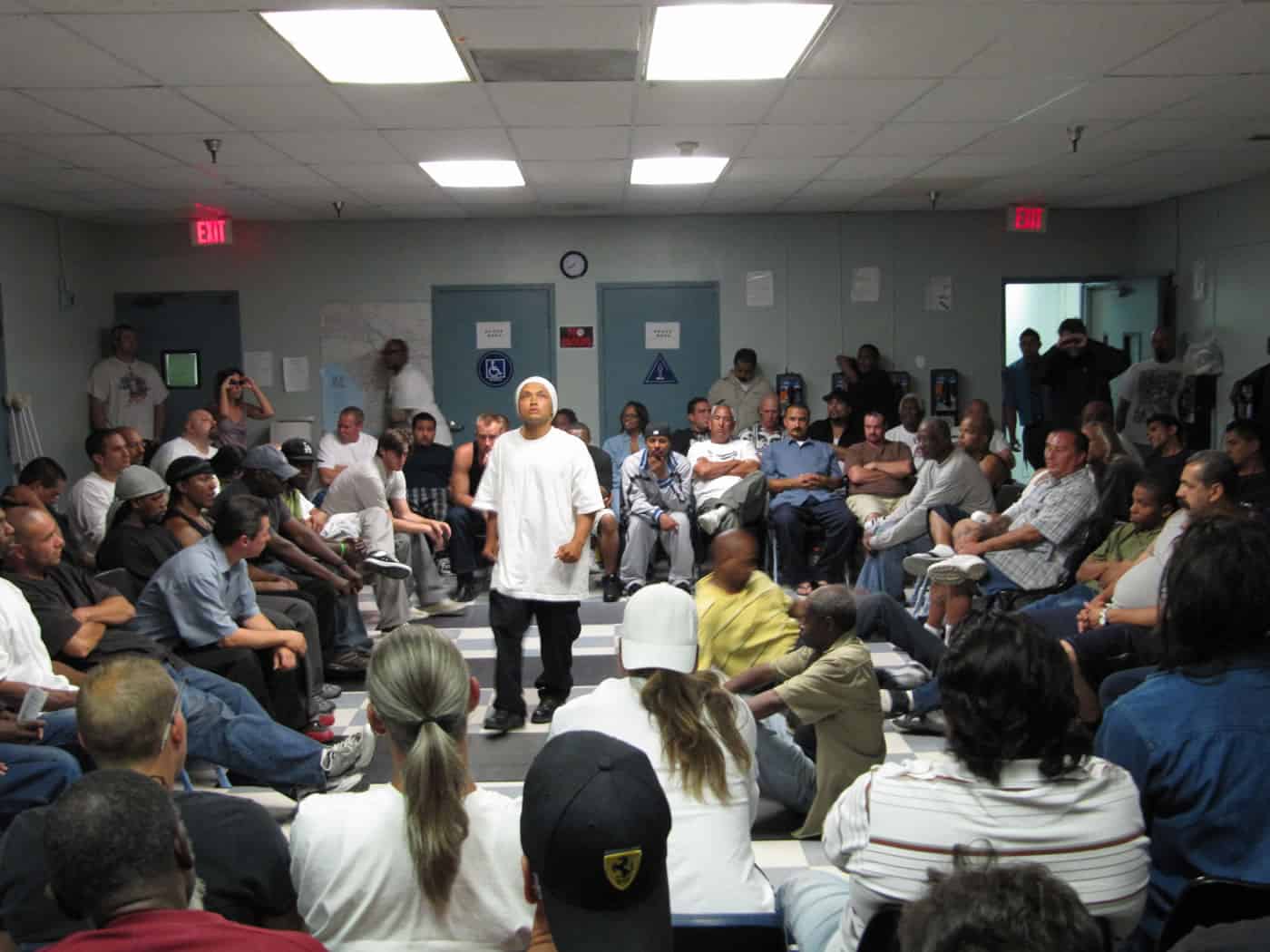
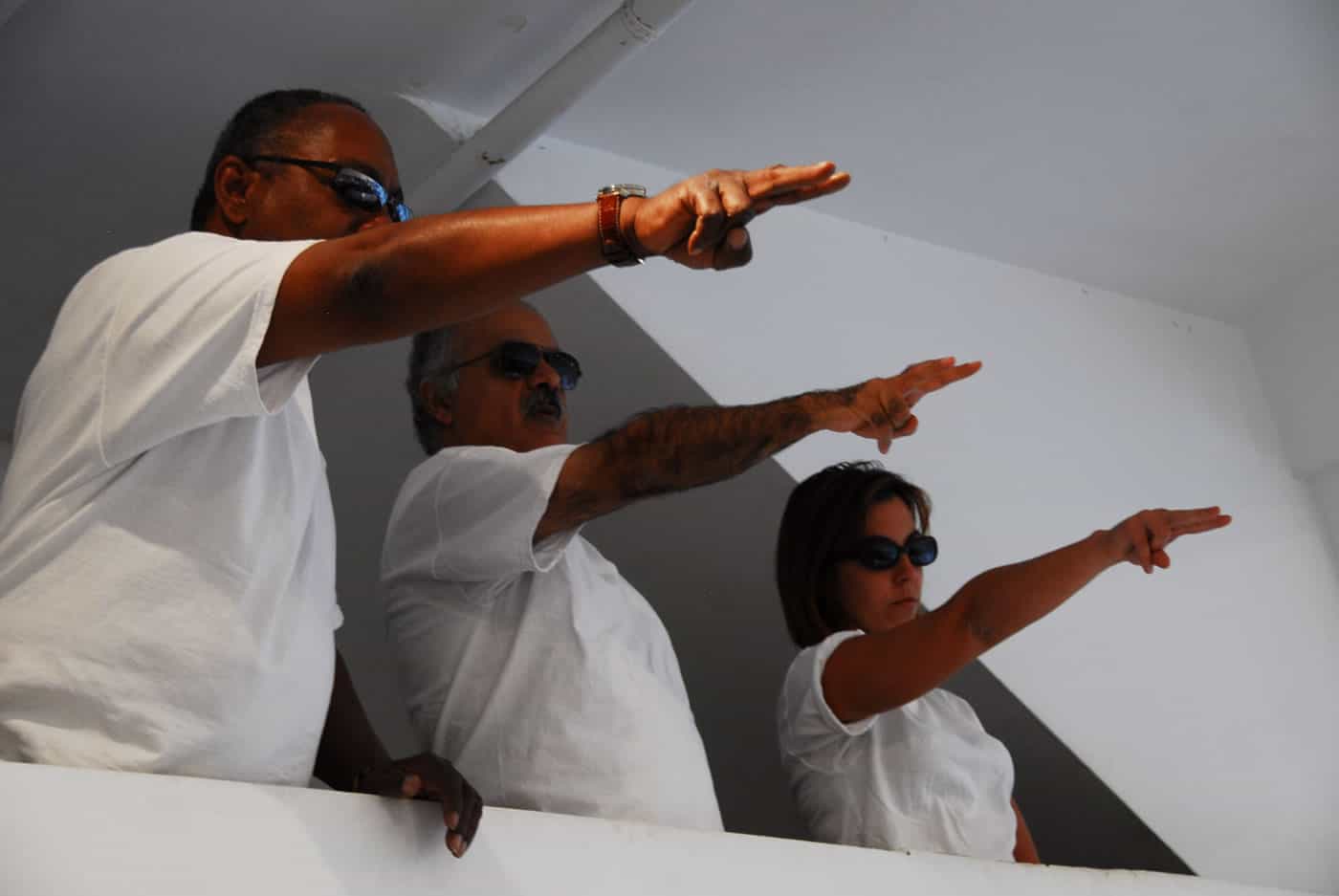
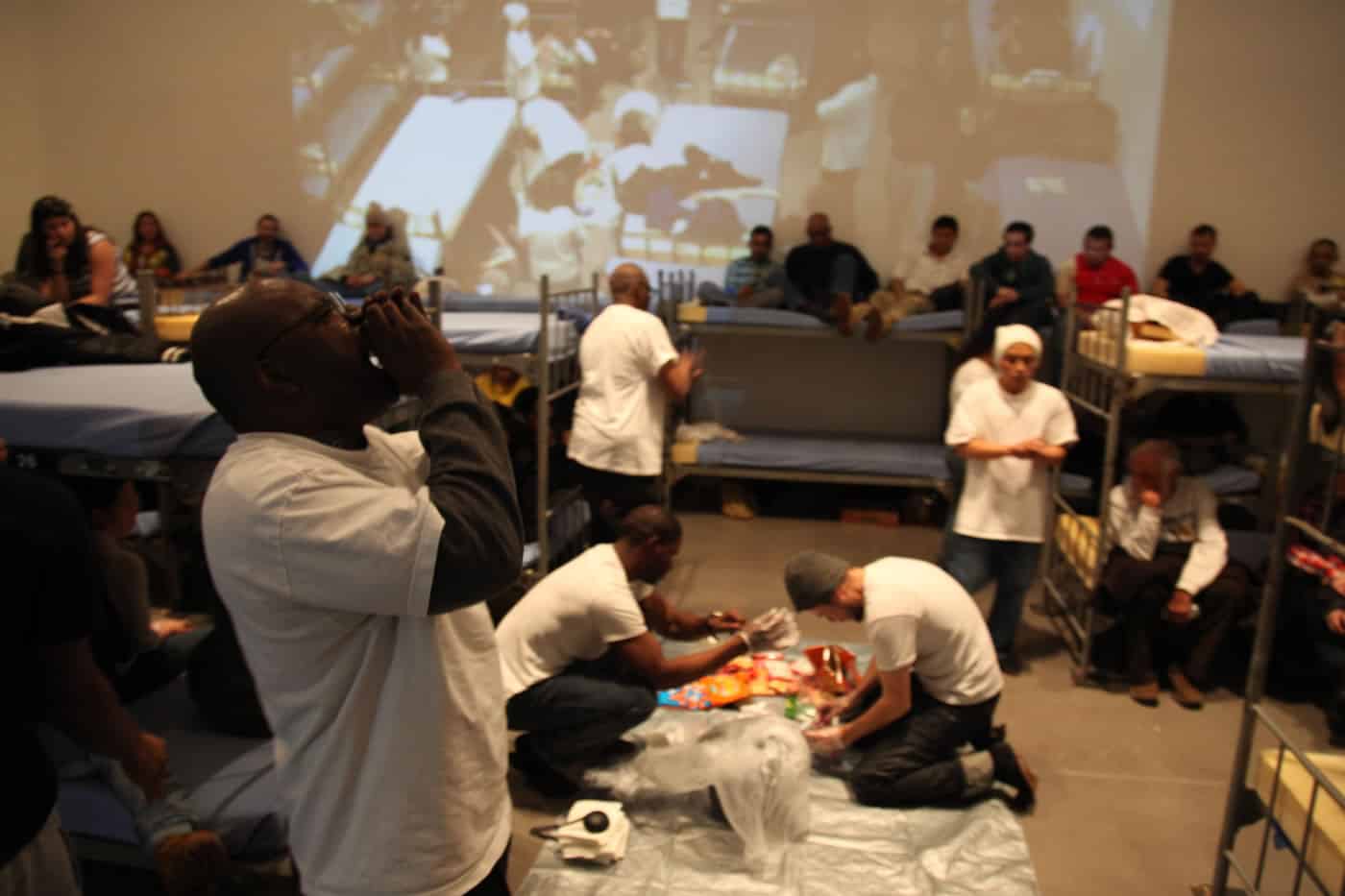
The exhibition included 5 performance events – each one different – all took place within the prison bunk-bed installation. Each performance was an experiment in which the performers, the audience, and the performance material, developed in LAPD workshops, were inserted into this restrictive prison architecture.
In 2010/2011 LAPD created an 8 hour film of 184 Californians reading the entire 184 page decision of 9th. Circuit Court. After the performances, visitors were asked to read one page from the 9th Circuit Court of Appeals ruling, that the health services and over-crowded conditions in California’s State prisons are in violation of the US constitution and constitute “Cruel and unusual punishment”. These readings were videoed. A 3 hour long edit of this movie was exhibited at Occidental College in April 2012; at the UC Riverside exhibit by Catherine Gudis & Molly McGarry ‘Geographies of Detention’ in July 2013; and as part of the ‘Inside/Outside‘ exhibition at the Wignall Museum of Contemporary Art in he fall of 2015.
 Pages read by Californians at previous project locations were projected as part of the exhibition in conjunction with the performance at Highways Performance Space, Santa Monica on Jan. 28 & 29 and Feb. 4 & 5, 2011. LAPD created an exhibition in the gallery that included images charting the expansion of the prison population and prison construction in California over the past 3 decades. The exhibition also included elements from the prison poster collection of The Center for the Study of Political Graphics. In a skype interview with Michael Bien, the lawyer for the plaintiffs in the case, and with introductions by lawyers from ACLU we informed the audience about the case before the performance started.
 June 15 – 18, 2011 – RADAR LA
“Scared Straight! has nothing on this often compelling piece of political theater.” —LA Weekly.
In a performance space filled wall-to-wall with prison bunk beds, performers and audience share overcrowded conditions akin to a California state prison for the latest work from Los Angeles Poverty Department (LAPD). One-third of the state’s parolees settle in the 55 square blocks of Los Angeles known as Skid Row, and State of Incarceration—developed collaboratively by LAPD’s Skid Row artists and in dialogue with organizers and recent parolees—powerfully examines the consequences of California’s penal system on individuals, families and communities. Outlining a ritual of incarceration from entry to release and re-integration, State of Incarceration constructs a complex challenge to the societal perceptions and fear-based policies of a nation with the highest rate of incarceration in the world.
Video performance excerpts were part of the Police and Thieves exhibition, curated by Karla Diaz and Mario Ybarra Jr. at the Hyde Park ArtCenter in Chicago, from February 13 – May 29, 2011. Performance photographs are part of a traveling exhibition Site Unseen: Incarceration, guest curated by Sheila Pinkel, at the Los Angeles Valley Art College Gallery from March- June 2015.
 January 31 & February 1, 2014 – the Queens Museum, New York.
LAPD’s State of Incarceration was the centerpiece of the retrospective exhibition. State of Incarceration’s 60 prison bunk-beds are installed in 1200 feet of gallery space along with video excerpts for the 4 month duration of the exhibition. LAPD’s large State of Incarceration cast came to NYC for a week of performances and residency activities, which included public conversations and workshops on reforming the criminal justice system.


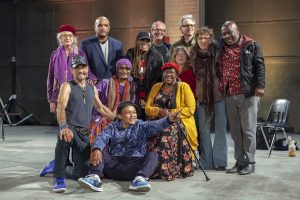
 Performers and contributors 1st cast: ‘History of Incarceration Song’ and ‘Making the Spread’ text by Riccarlo Porter with Debra Anderson, Celestine Williams, Vinson Fuller, Charles Jackson, Austin Hines, Bill Grant, Jimmy Johnson, Daniel Meza, Ibrahim Saba, Henriëtte Brouwers, Jennifer Campbell, Richard Butts, Sista Mary, Michael Coleman, Jesse Buenrostro, Wylie and ‘CO – Prisoner’ texts by John Malpede, ‘The Slave Boat’ by KevinMicahel Key, ‘Jumping Jacks’ by Anthony Taylor, ‘Buck Rogers Time’ by Ronnie Walker, ‘Predatory Prisoner’ by Diop Ababacar, ‘My First Job’ by Elona Williams and more!